











WASHINGTON D.C.
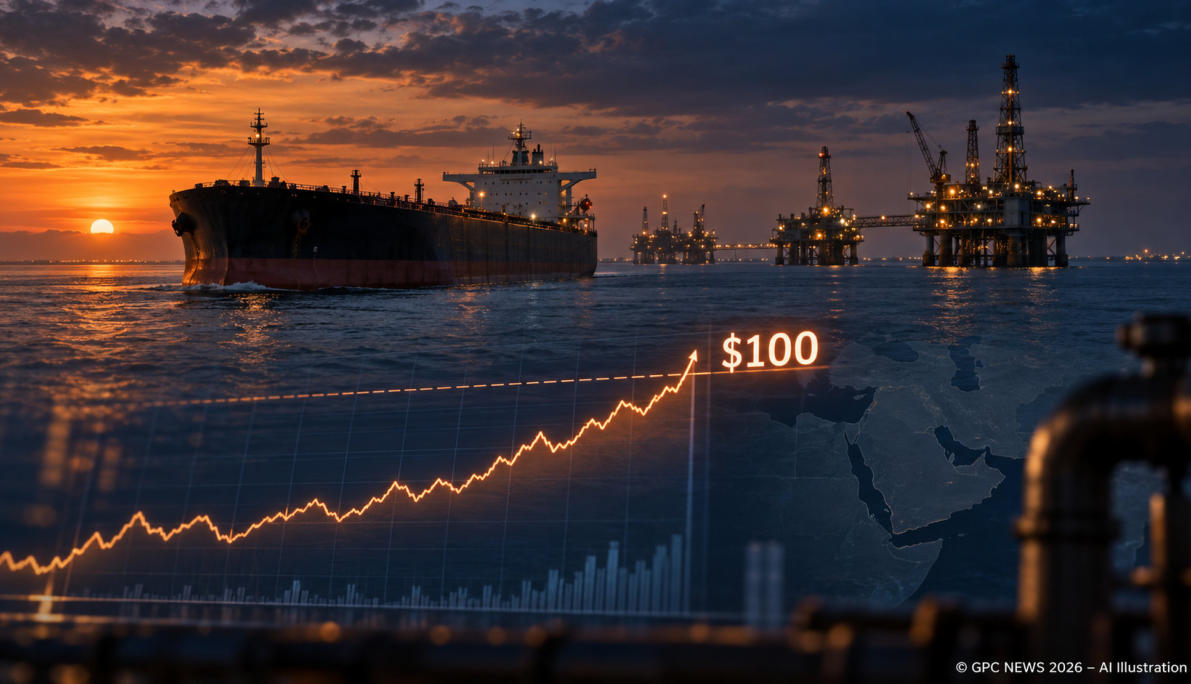
Global Press Connect provides independent news and analysis on international  politics, the economy, and humanitarian developments. © 2026 GlobalPressConnect | GPC.NEWS Founded and operated by Simone Mayer & Helping Hands for Children Foundation Inc. | Los Angeles, California, USA GlobalPressConnect (GPC.NEWS) is an independent international news organization dedicated to delivering accurate, impartial, and timely journalism. Our mission is to provide verified reporting, editorial integrity, and in-depth coverage of global affairs, politics, business, financial markets, technology & AI, entertainment, humanitarian issues, weather, and breaking news. All Rights Reserved. BRENT CRUDE BREAKS $100 AS MIDDLE EAST WAR THREATENS GLOBAL SUPPLY    LONDON, September 9, 2026 — Brent crude climbed above $100 a barrel Wednesday as the expanding conflict in the Middle East threatened oil production and two of the world’s most important maritime trade routes. The international benchmark rose as high as $100.69 a barrel, while U.S. West Texas Intermediate crude reached $95.21. Both recorded their strongest levels since late July as traders reacted to escalating attacks involving the United States, Iran, Saudi Arabia and Iran-aligned Houthi forces. The immediate pressure followed the largest wave of attacks against shipping since the U.S.–Iran conflict began six months ago. Iran said it struck ten vessels near the Strait of Hormuz after U.S. forces sank five Iranian oil tankers. Several commercial ships were also reportedly damaged or disabled in the Persian Gulf and Gulf of Oman.  The Strait of Hormuz carried approximately one-fifth of global oil supplies before the war. Even a partial or temporary interruption can affect energy markets worldwide because exporters have few alternatives capable of handling the same volume. Tensions are also increasing around the Red Sea, where Houthi forces have attacked Saudi cities and energy installations. The simultaneous threats to the Strait of Hormuz and Red Sea shipping corridor have raised concerns that producers may struggle to move sufficient oil to international customers. Saudi Arabia has redirected some exports to alternative terminals, but analysts warn that continuing attacks against pipelines, refineries and ports could restrict the kingdom’s ability to compensate for lost Iranian supplies. The impact is already spreading beyond crude oil. European diesel futures have risen to the equivalent of approximately $199 a barrel, while gasoline-market premiums are approaching record levels. U.S. diesel prices have also reached unprecedented highs. More expensive oil and refined fuels could quickly increase transportation, manufacturing and food-distribution costs. That would create another inflationary shock for households and businesses already dealing with higher prices.  The development presents an additional challenge for central banks. Policymakers must now balance weakening economic growth against the risk that rising energy costs will keep inflation elevated. Expectations for future interest-rate decisions could change rapidly if oil remains above $100. Major financial institutions, including Goldman Sachs and Bank of America, have raised their oil-price forecasts as the regional conflict continues. However, the direction of the market will largely depend on whether shipping through the Gulf remains possible and whether further energy infrastructure is damaged. Oil prices have risen sharply since early August, but volatility remains extreme. A diplomatic breakthrough or restoration of reliable shipping could bring prices down. Further attacks around Hormuz or Saudi energy facilities, however, could push them significantly higher.  For governments, businesses and consumers, the return of triple-digit oil represents more than a market milestone. It is an early warning that the military escalation in the Middle East is beginning to affect the wider global economy. © 2026 GPC.NEWS — GlobalPressConnect MARKETS & ECONOMY